Tuesday, November 14, 2017

Avoid These Three Interview Mistakes If You Want To Score Your Dream Job

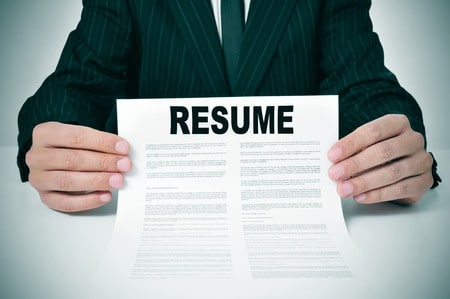
When job hunting, knowing what and what not to do is as important as having a polished and impressive resume. Though your job interview results can be subjective, there are things that you need to avoid doing to improve the chance of making a great impression.

Image source: philly.com

1. Failing to prepare

“If you fail to prepare, then prepare to fail,” is a saying no better applicable than in a job interview. Treat it like you would an exam. You can’t just wing it. With thousands of applicants you interviewer has already faced, they’d see your unpreparedness from a mile away.


2. Wearing the wrong outfit


We know it’s wrong to judge a book by its cover. But your interviewer is there to do just that – to judge you. If you show up to the interview underdressed, then you make a wrong impression before you even sit down to introduce yourself.


3. Coming in late or very early


Of course, never ever be late for your interview, but don’t come too early either. It may inconvenience your interviewer. The best time is about 10 minutes before. It’s enough time to compose yourself, use the restroom, and prepare yourself for the conversation.


Image source: thrillist.com

Hi there! I’m Larry Polhill, a retired career consultant from Arizona. I give advice to people looking to land a job. Visit this page to learn more.

Thursday, August 10, 2017

Proper And Important Questions To Ask After a Job Interview

Job hunters usually focus an inordinate amount of time troubling over questions that the interviewer might ask during a typical interview session. Obviously, this is of paramount interest because all interviewees, in the end, want to impress the potential employer. What is unfortunate about the situation is that people forget that the last part of the session involves the opportunity to ask the interviewer the right questions.

Image source: commons.wikimedia.org

If one dismisses it as simply the interviewer’s way of capping it off, then the prospect of learning more about the job is lost here, not to mention leaving the impression that one is simply not that interested in acquiring more knowledge about the company or the work being done there. Asking questions gives the interviewee this chance of a lifetime to gain insider’s insight into employee relations, the nature of the job, and other things that might eventually be pertinent if one eventually gets hired.

This part of the interview is for the benefit of both parties. The interviewee must not ask questions just for the sake of it. One must also refrain from focusing on questions where the immediate gain is personal and not really for the future good of the company.

Information about health benefits, compensation, or leave allocations can probably wait and may be raised after the hiring process is through. One should instead ask questions about career growth potential, typical and particular demands and obstacles of the job, and anything that illustrates one’s interest in the possibility of working there.

Image source: pxhere.com

Gutsy questions that might give one an inkling as to how the interviewer sees the applicant’s qualifications might also be added. Although they can be very difficult to ask, they are ultimately appropriate. The interviewee should be able to assess his or her chances at the onset, phrasing the questions subtly to avoid the risk of sounding insolent.

Hello! My name is Larry Polhill, a retired career consultant from Arizona. If you want to learn more about how job applicants succeed in the hiring process, follow me on Twitter.

Wednesday, July 12, 2017

Should Your Resume Be Just One Page Long?

Resume length is among the issues that still likely divide hiring experts and job seekers. Should a resume be one page long, or is it all right to exceed that prescribed length and go for two pages or more?

Image source: Pixabay.com

Ideally, resumes should be one page given the short attention spans of recruiters and managers. The resume functions as an ad that does not have to be comprehensive or contain everything one has done in his or her career, so it’s all about including what’s relevant.

According to Forbes Magazine article, however, there are factors to consider when deciding if a resume should be more than a page long. For one, it’s all right to exceed a single page if one has enough relevant experience, training, as well as credentials pertaining to the position he is aiming for.

It is also deemed justifiable to go beyond a page when there’s impeccable content but no more available space despite editing, downsizing fonts, and tweaking margins. It’s better than submitting something with 8-point fonts, presenting text that’s too condensed, or having poorly organized or communicated thoughts on paper.

Image source: Pixabay.com

In filling the space on the second page, however, make sure to be strategic and list relevant and valuable information. Add details on leadership, volunteer work, hobbies and interests, and sports. This section will demonstrate a life outside of work and offer some insight into the applicant’s personality.

Hailing from Arizona,Larry Polhillis a retired career consultant who seeks to help jobseekers land their dream job through his expert views and experiences. Read more on this blog.

Wednesday, March 8, 2017

The Advantage Of Having More Than One Resume

More and more people are becoming multi-disciplined, excelling at more than one thing. Whether they take extra units in school or pick up things along the way and teach themselves, people have somehow gotten wiser and realized that specializing at more than just one thing can open more doors for them. The internet has made it so much easier for people to learn new things, and not just trivial things – things that make a person in-demand in several industries.

Image source: ontheroadtord.wordpress.com

For those who’ve gone through the learning process and put their talents to good use by successfully entering new industries and gaining much-needed experience, they have to realize that their potential has grown as well. Here’s where multiple resumes come in.

People who are multi-disciplined, who also have substantial experience in different industries, can modify a master resume to fit the needs of their target company. For example, if an applicant is adept and has experience in the fields of corporate training, team management, and IT, he can create three different resumes highlighting each strength. The resume that focuses on IT can be sent to a company that needs an IT specialist. The same principle applies to the other resumes.

With the right skill sets, an ample amount of experience, and multiple resumes, applicants are more than likely to find employment than if they had only a single resume.

Image source: chameleonresumes.com

Hi! I’m Larry Polhill of Cafe Valley. I help people write their resumes. If you want to know more about how you can impress your dream employer with your resume, subscribe to this Twitter account.

Are bullet points necessarily bad for your résumé?

Bullet points in a résumé -- Larry Polhill Cafe Valley It’s quite common among job applicants to use paragraphs when preparing their résum...